freight · 2020-2021
Designing a Freight Platform Shippers and Carriers Can Both Use
As ShipCarte's solo designer, I rebuilt their brand, UX and design system from the ground up. The result was a modular transportation management platform that gets shippers discounted carrier rates in one click and gives carriers a modern alternative to brokers.
- Role
- User Experience
- Years
- 2020 - 2021
- Read
- 3 min read
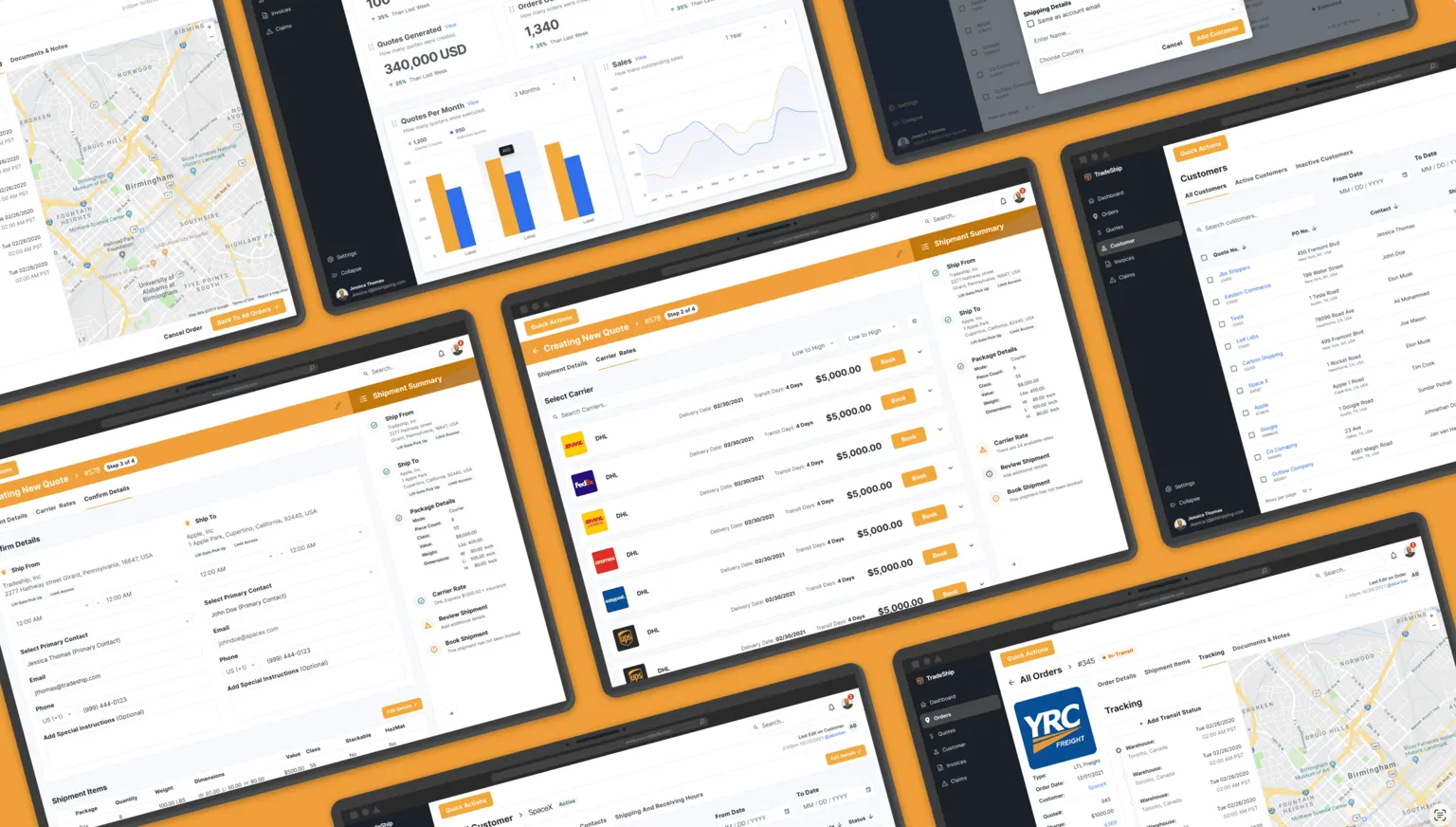
Overview
ShipCarte is a Toronto-based logistics startup built on 30+ years of freight experience. It runs as a shipping and fulfillment platform across Canada and the U.S., with 100+ carrier partners.
Their product is a transportation management system (TMS): one place to quote, book, track and pay for courier and freight shipments. The team knew the industry deeply, but didn't have the in-house design skills to turn that knowledge into a product people could pick up and use.
Challange
Two very different users needed to work in one system, in an industry that still runs on phone calls, brokers and a dozen logins.
- Shippers were tired of sourcing carriers one by one and logging into multiple accounts to compare price and transit time
- Carriers relied on third-party brokers instead of modern tools, and struggled to understand how digital freight platforms worked at all
- The data is dense (rates, bids, documents, invoices, statuses), and the UI still had to feel simple
- The brand, the marketing site and the product didn't look like the same company
My Role
Solo designer end to end: brand, product and system.
- Brand refresh and marketing materials
- Art direction
- UX: flows, IA, and dashboard architecture for both personas
- UI and a modular, atomic design system in Figma
- Partnered with ShipCarte's dev team on specs, system rules and the component library
Solution
Wireframes
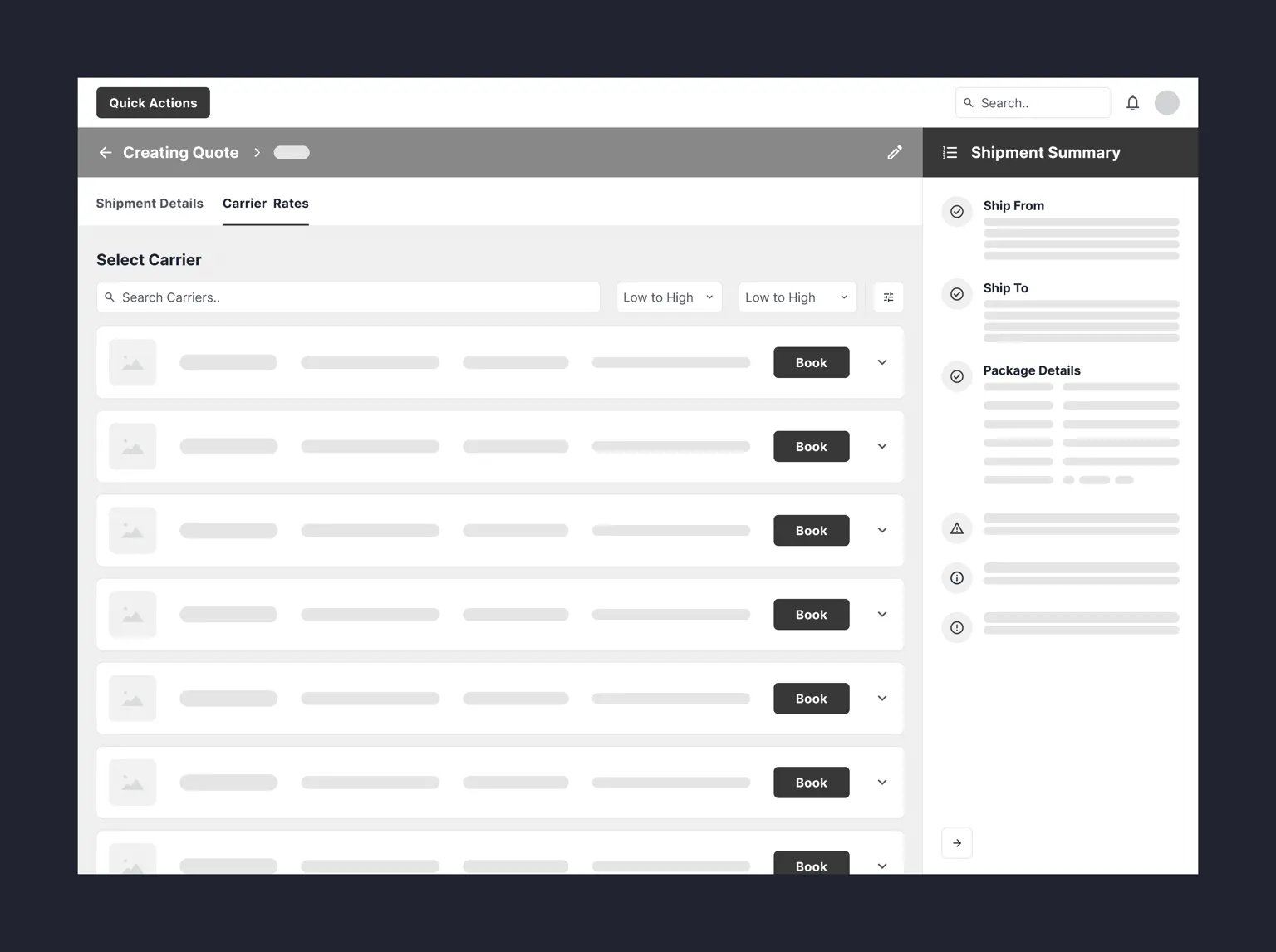
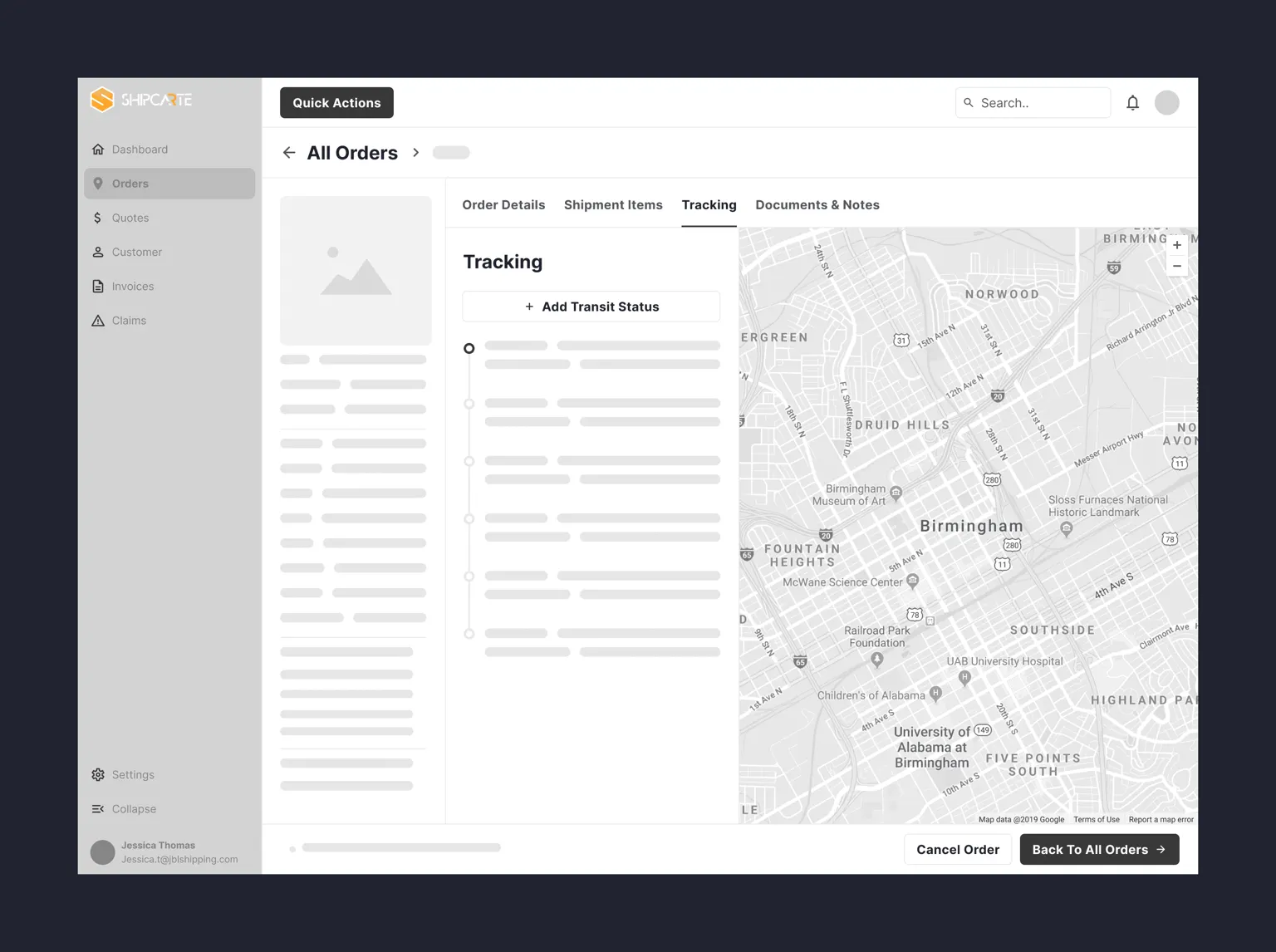
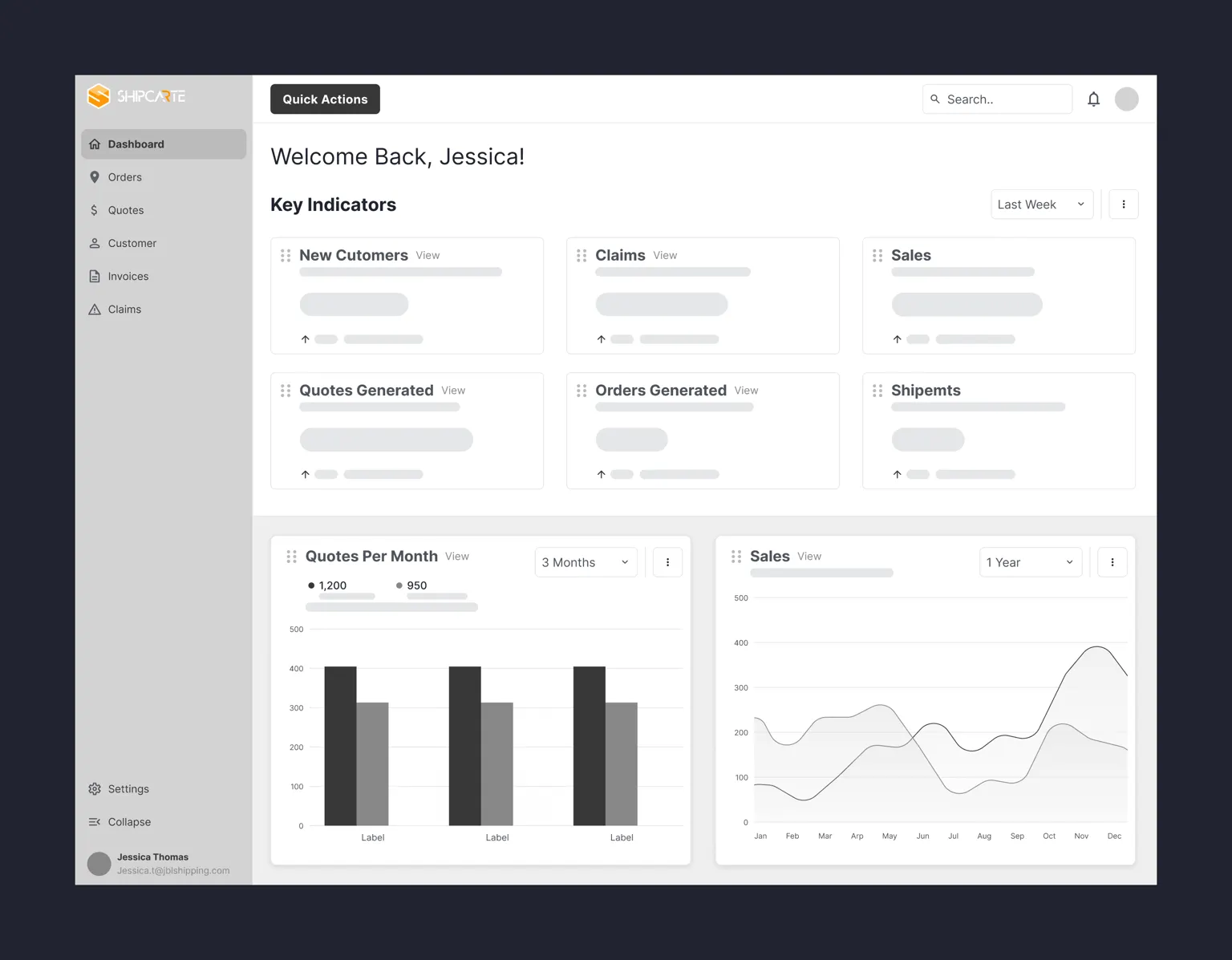
We've used wireframes as a communication tool, bringing clarity and tangibility to the product decisions. Here's where assumptions were validated and product strategy was discussed in the early stages of each new feature.
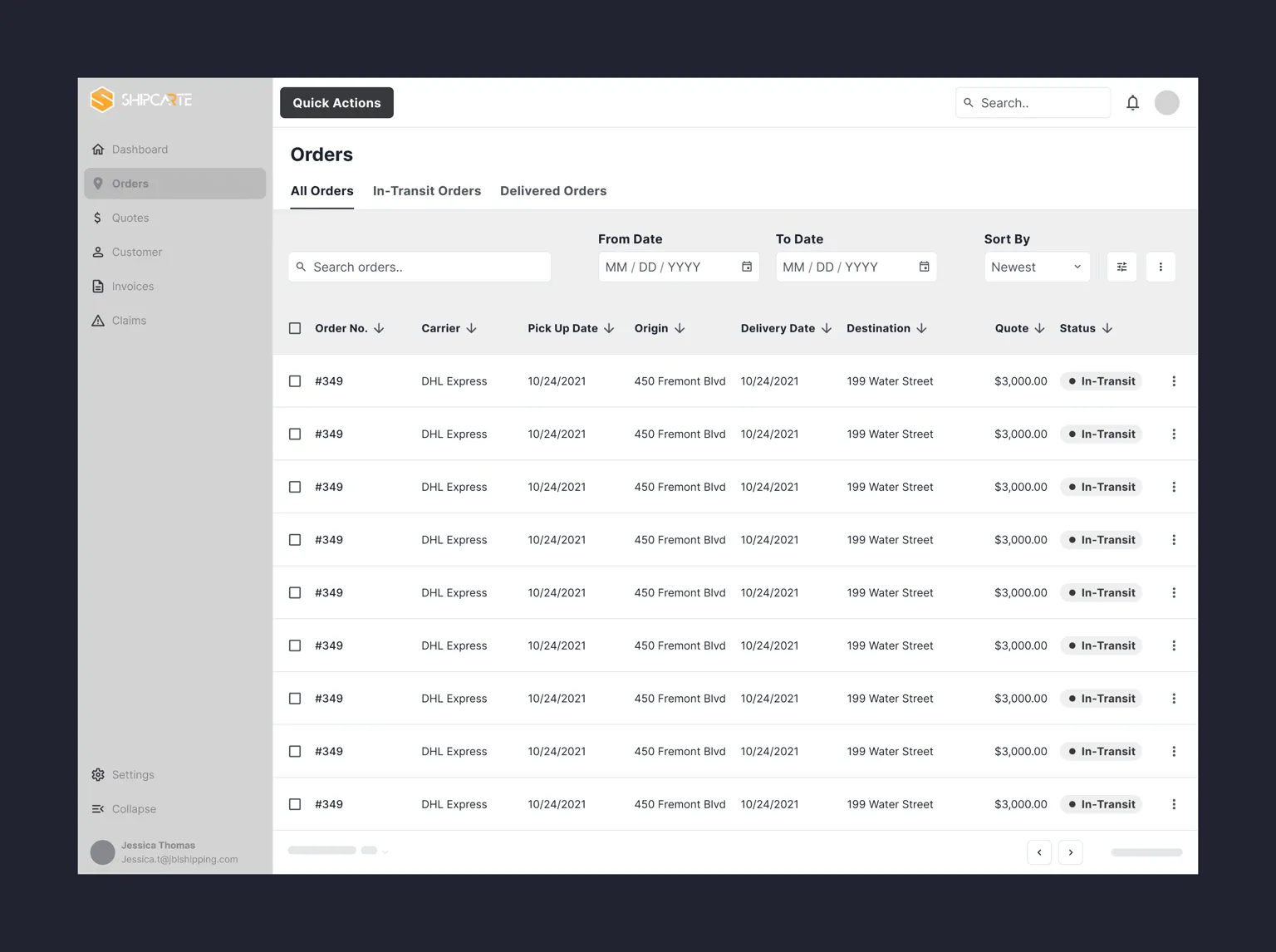
System Thinking for Scale
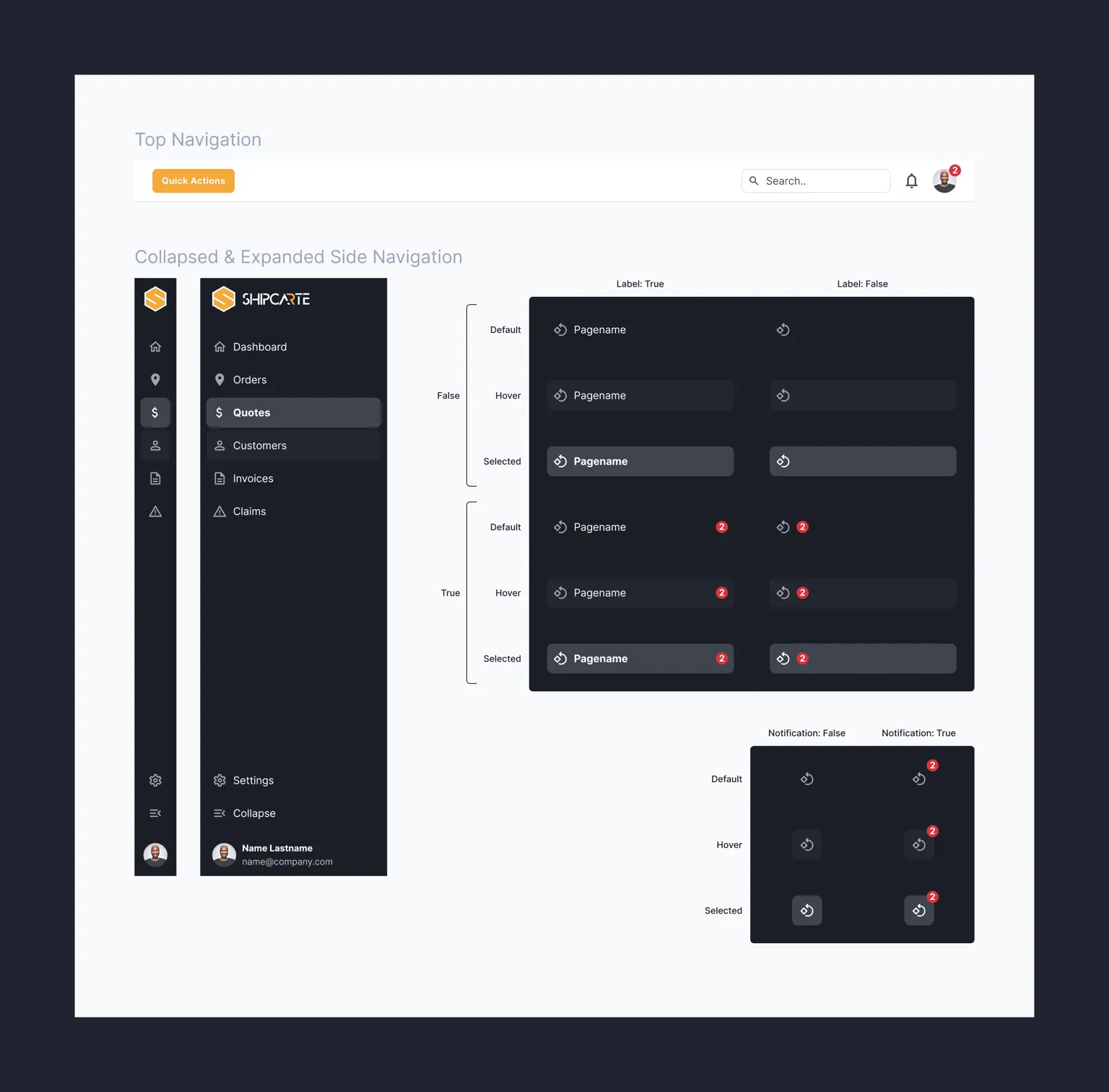
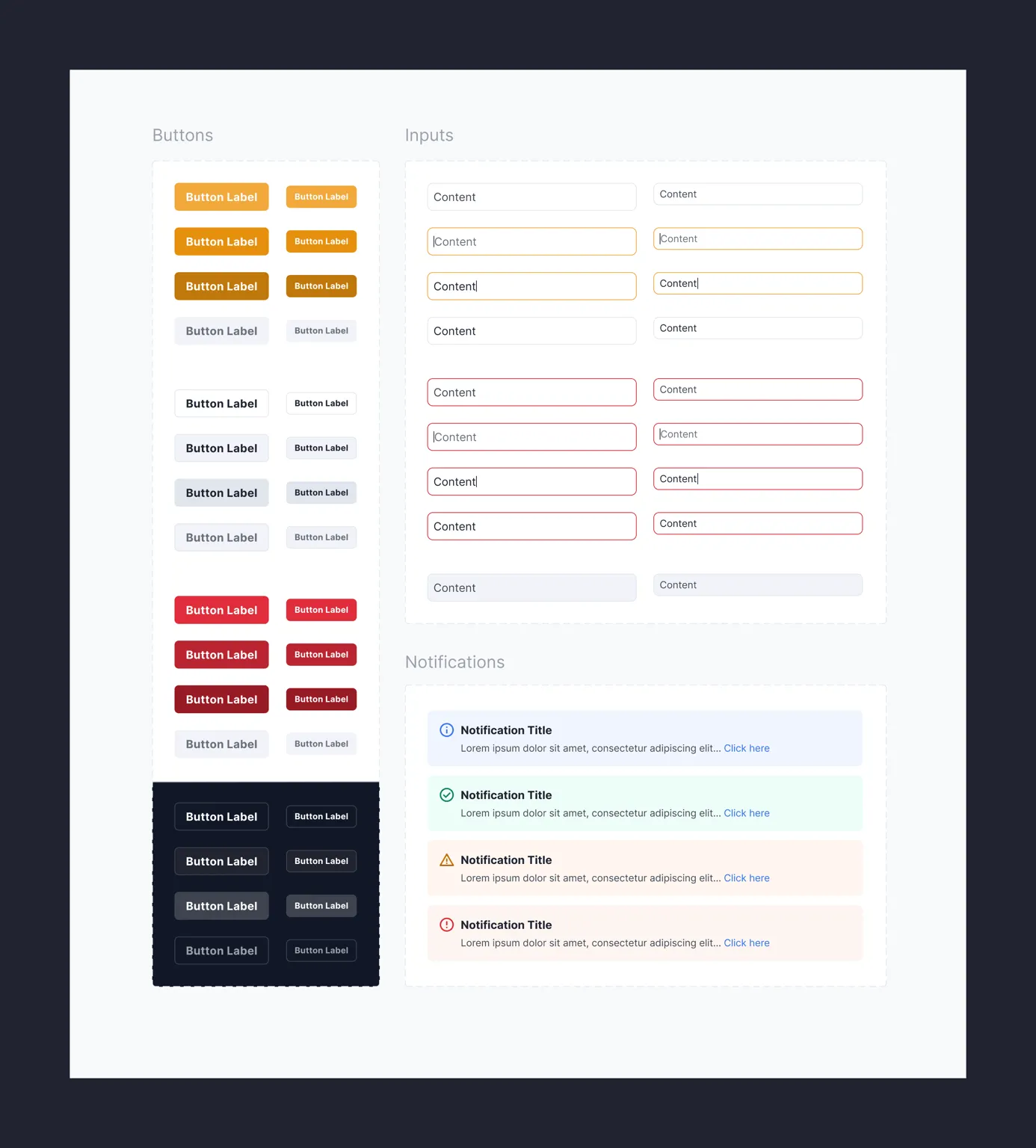
The Design System was created to provide centralized and consistent standards of visual language. A single source of truth, building bridges, and encouraging collaboration. All the files were organized and built using Figma
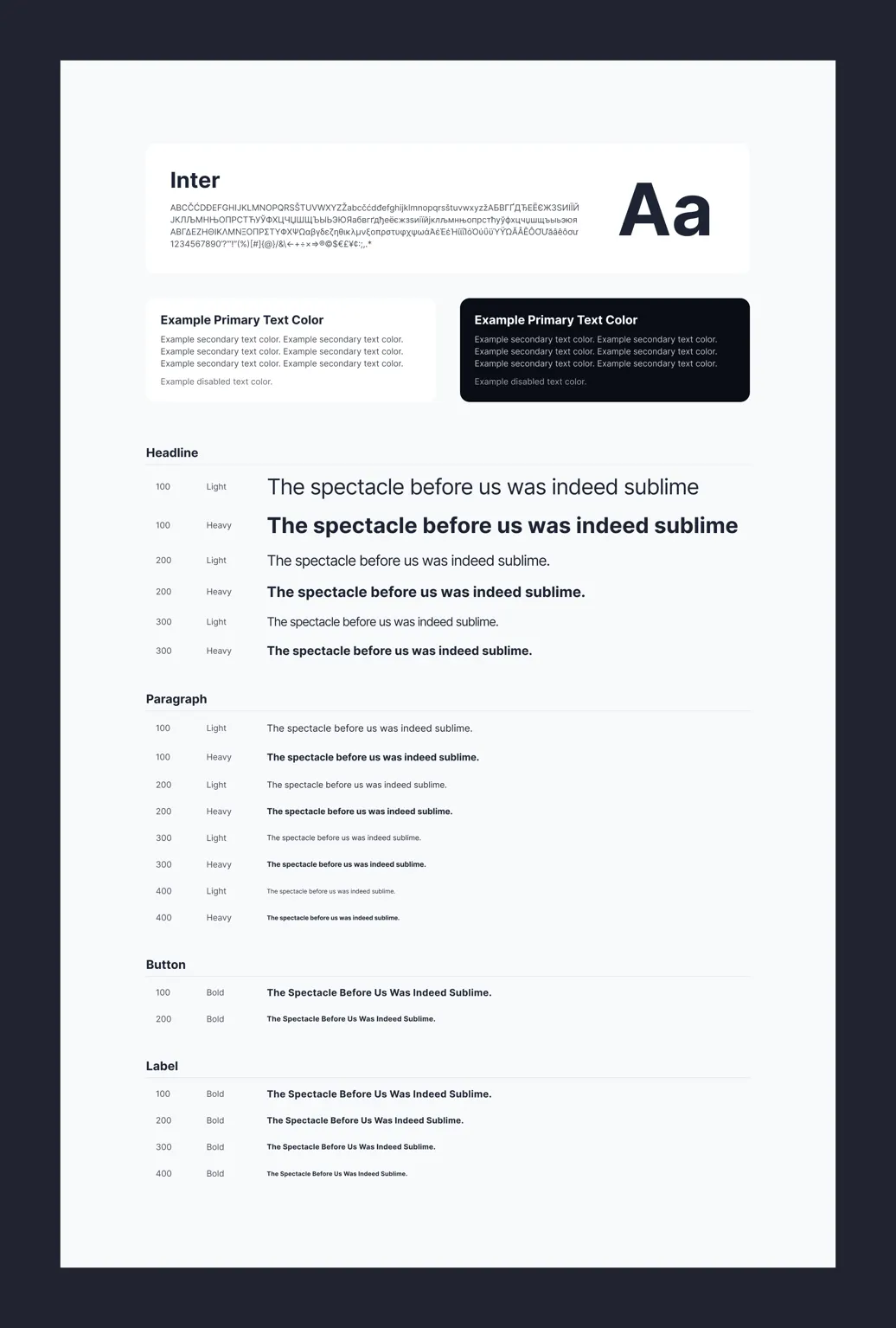
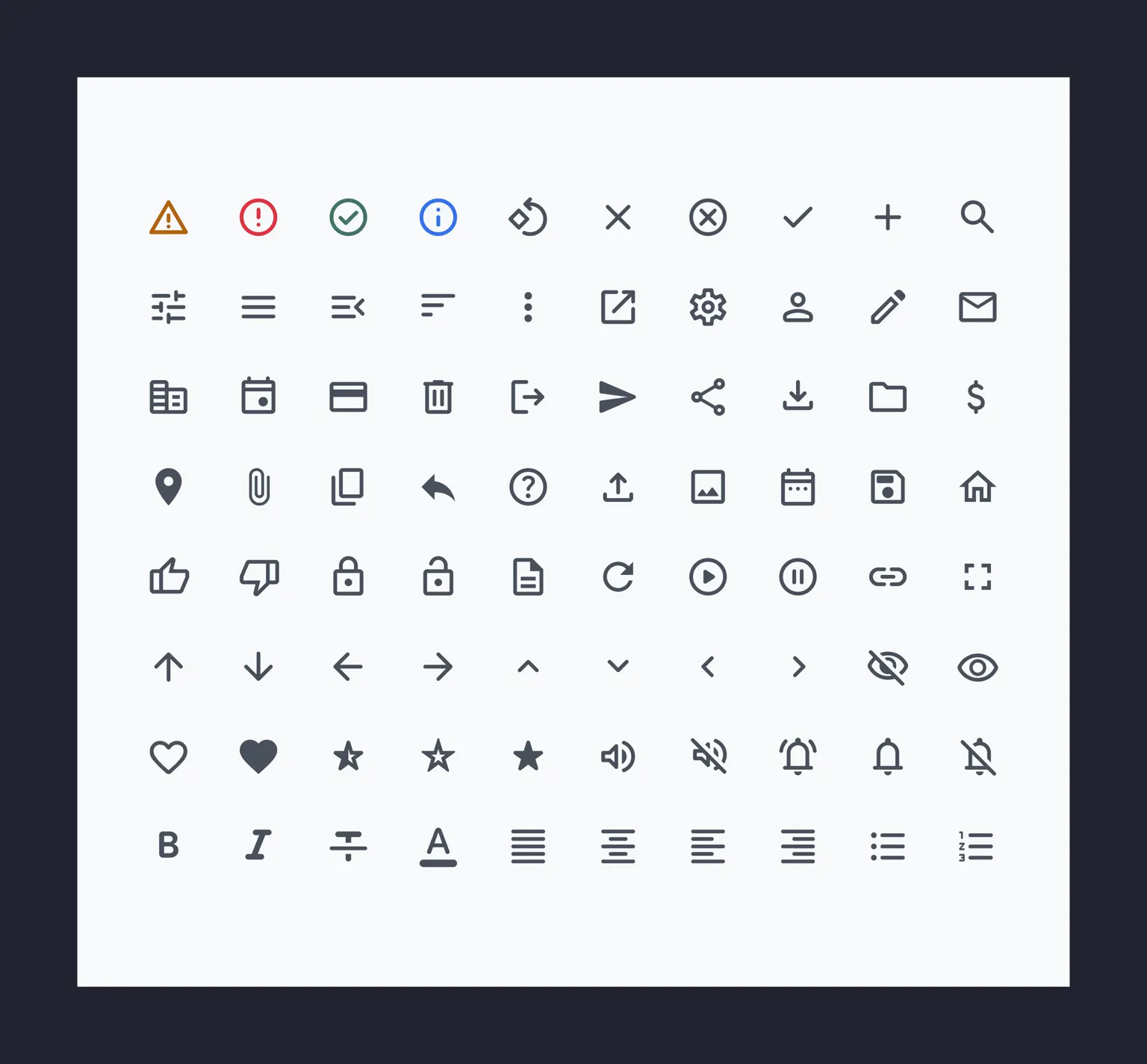
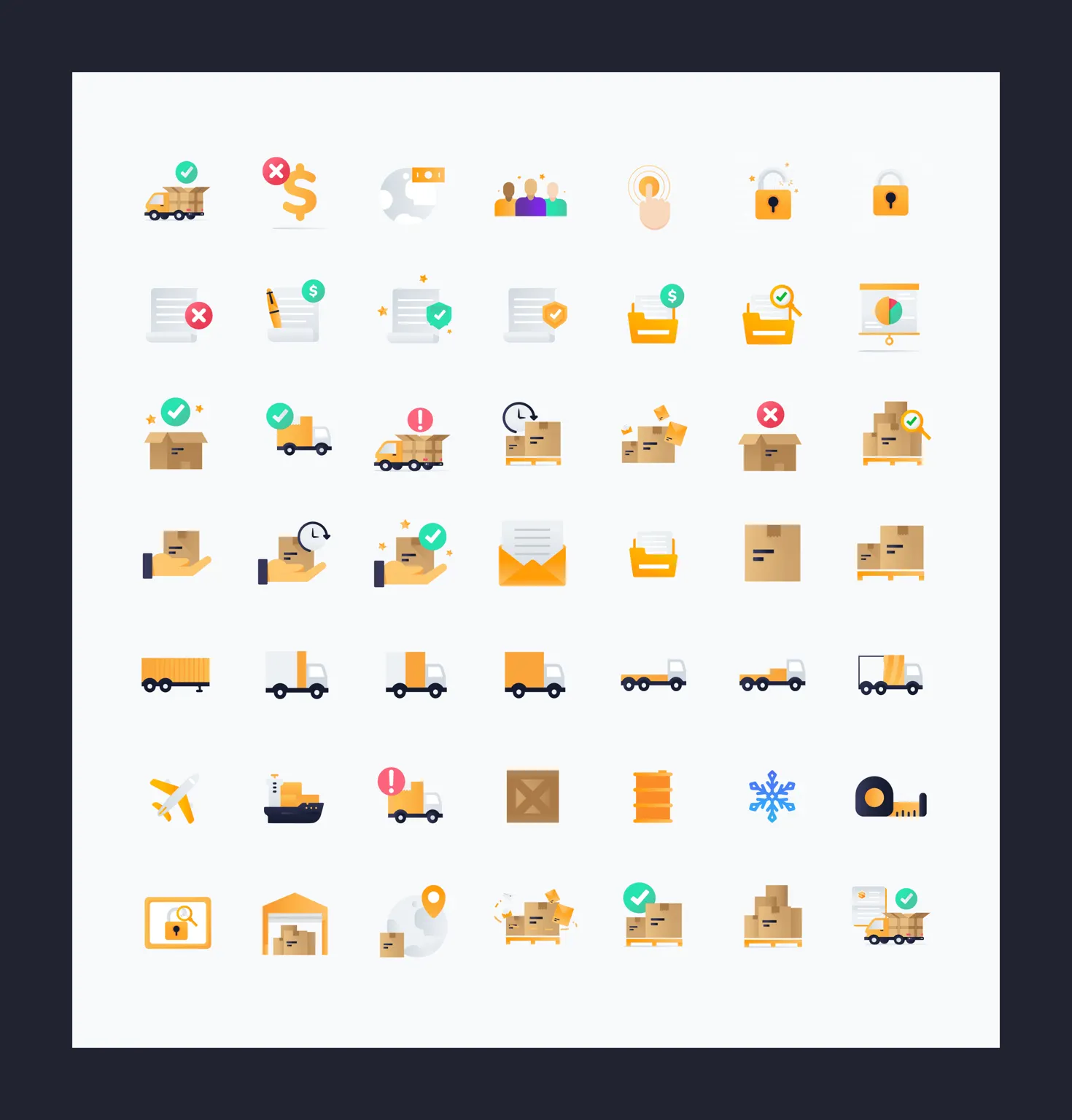
The Atomic Approach
Bringing the design process closer to the development was a game-changer in order to keep consistency. The system was crafted following the Atomic Design principles which is an approach to page building for building effective designs from the bottom up.
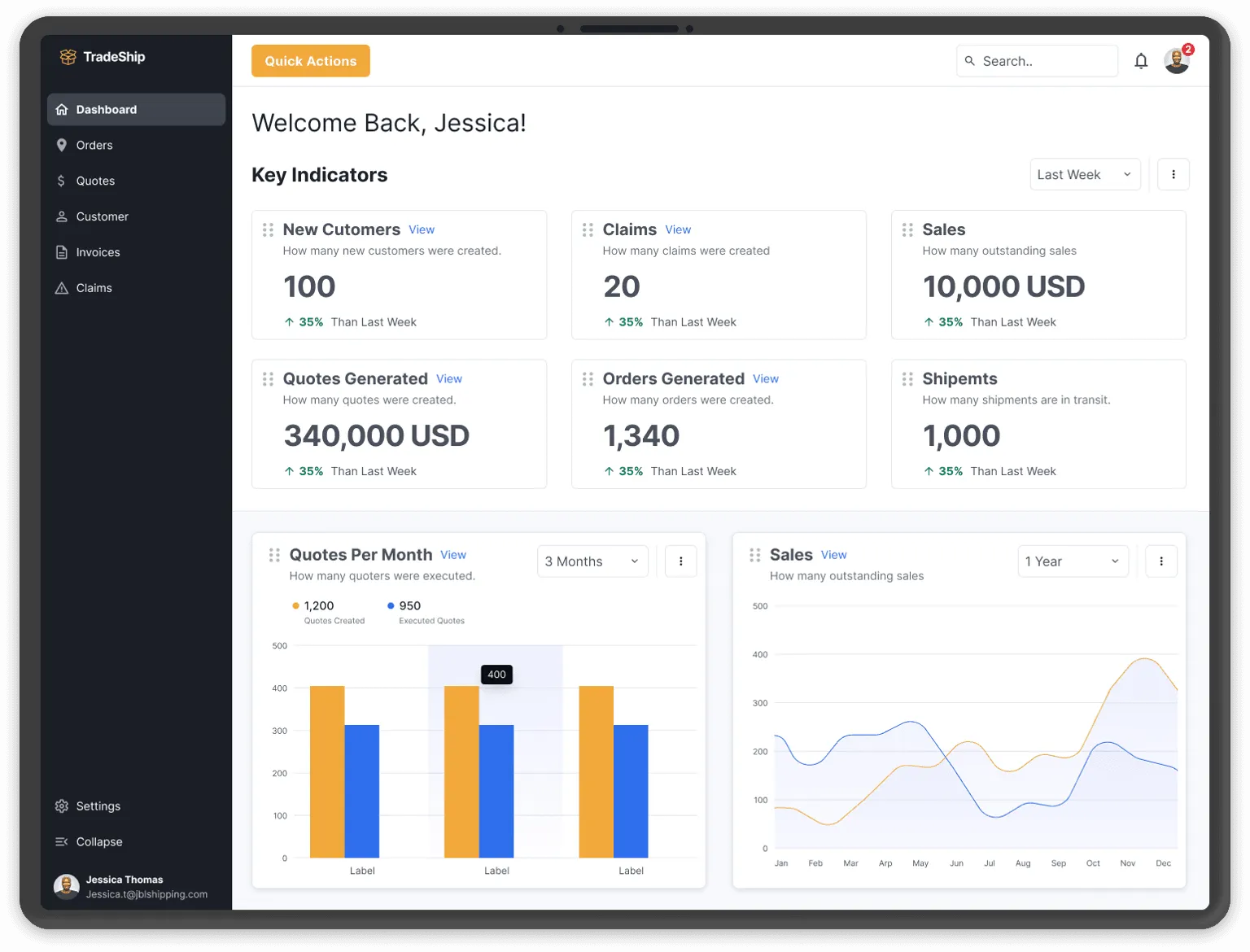
Adaptive Modules
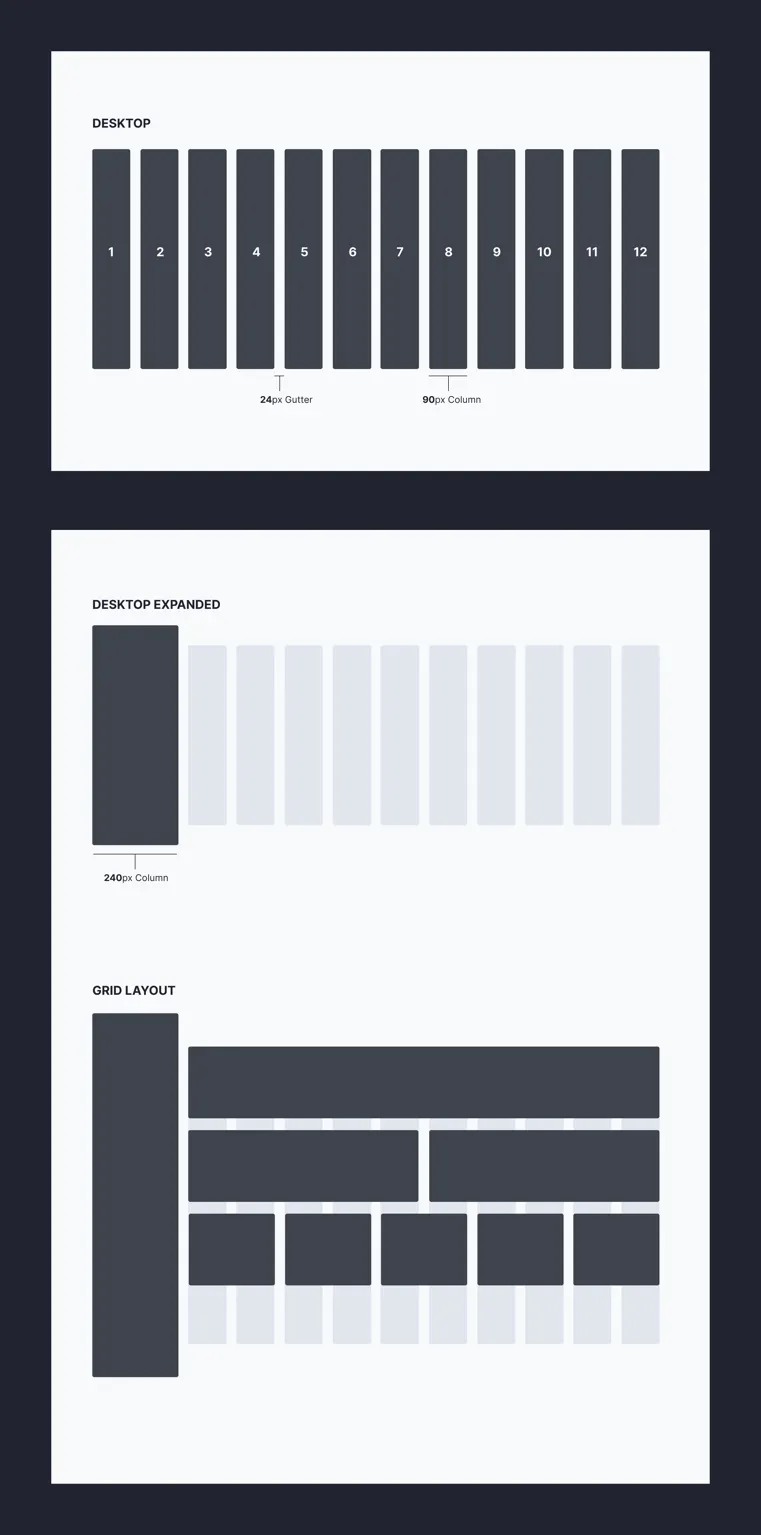
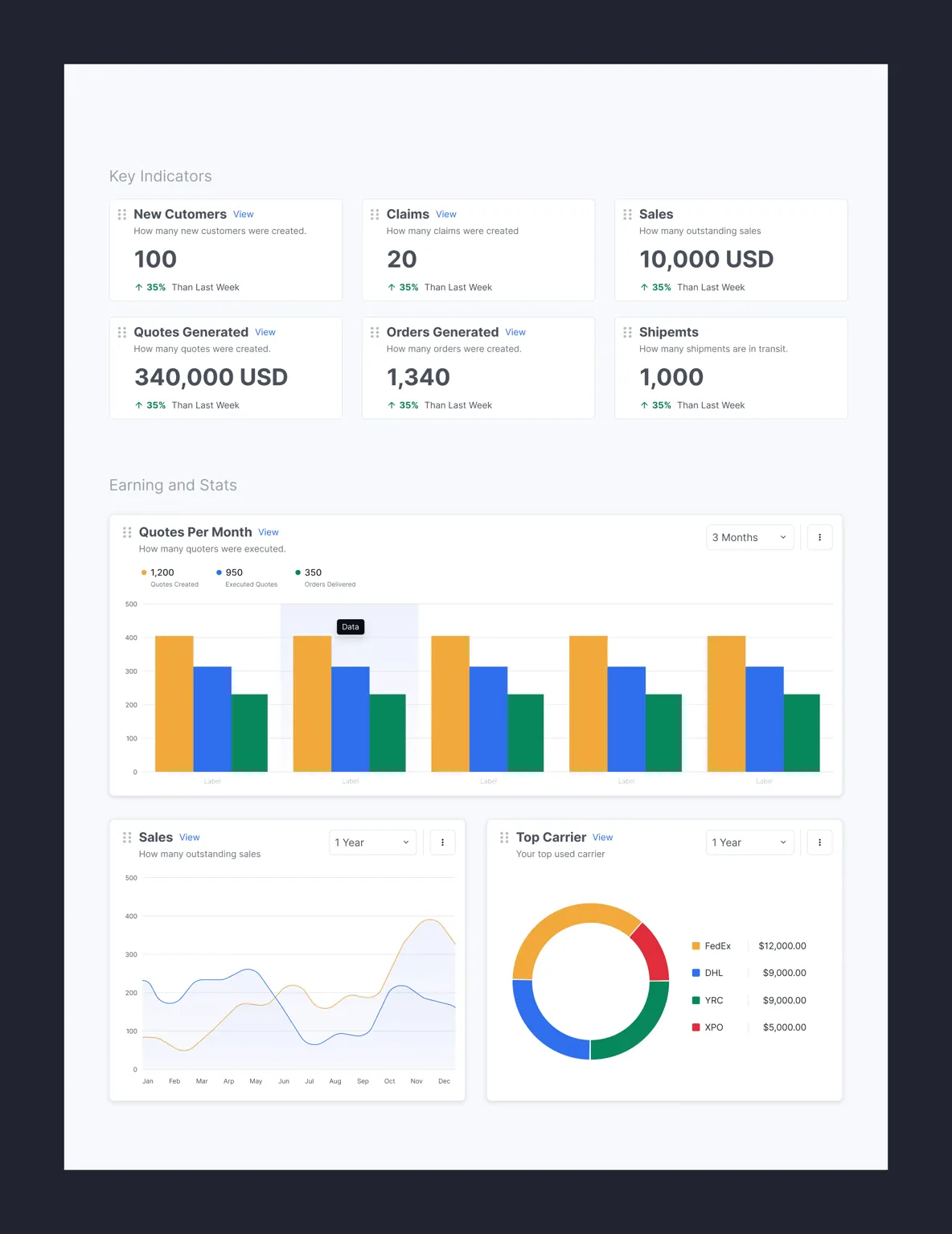
Users can move and add dashboard modules with advanced conditions. On the background, you can see the dashboard layout, which can consist of a different numbers of columns (4-8-12).
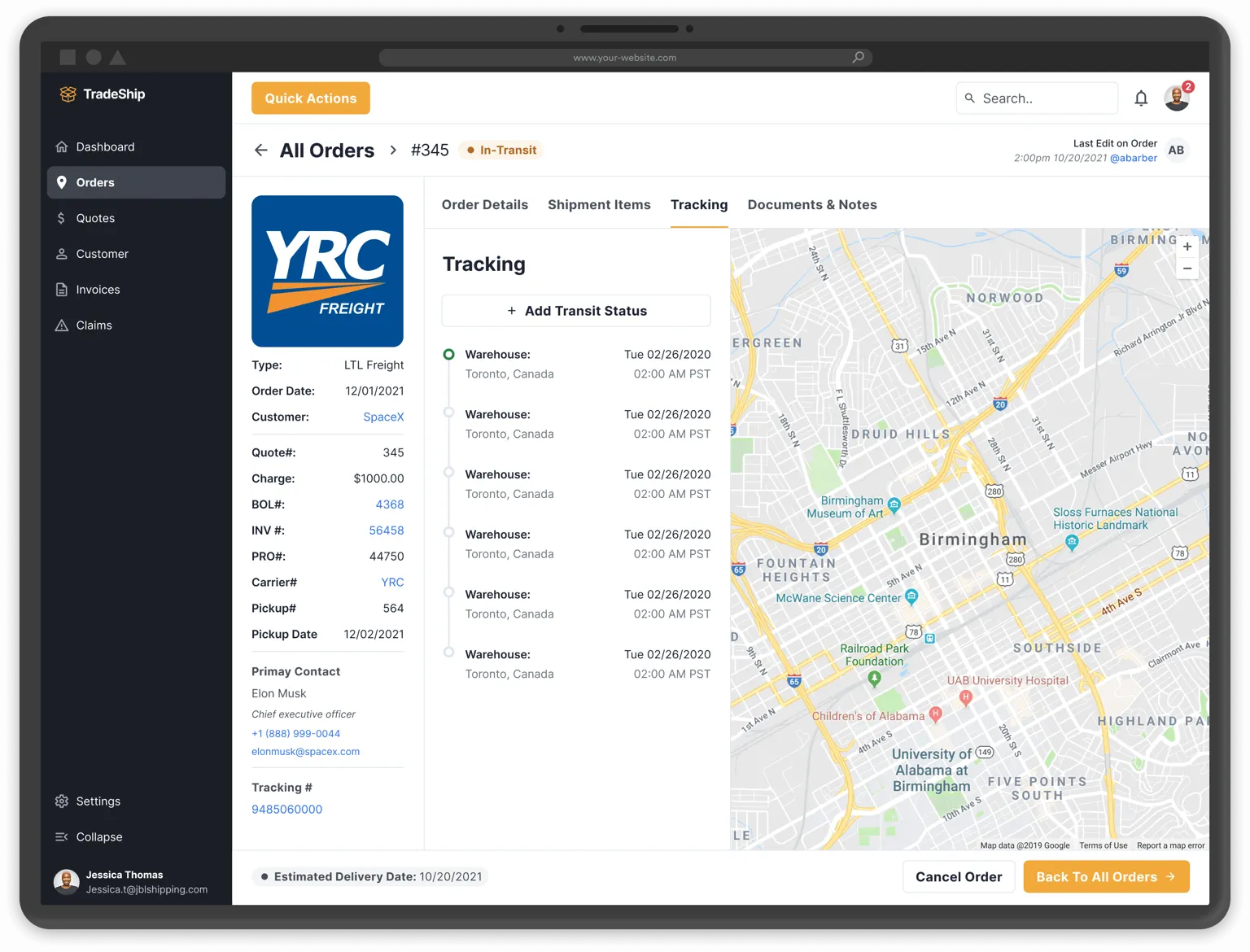
Shipment Tracking
Users can create, monitor, and manage shipment details, transit statuses, documents, and shipment invoices - everything they could need to manage their supply chain.
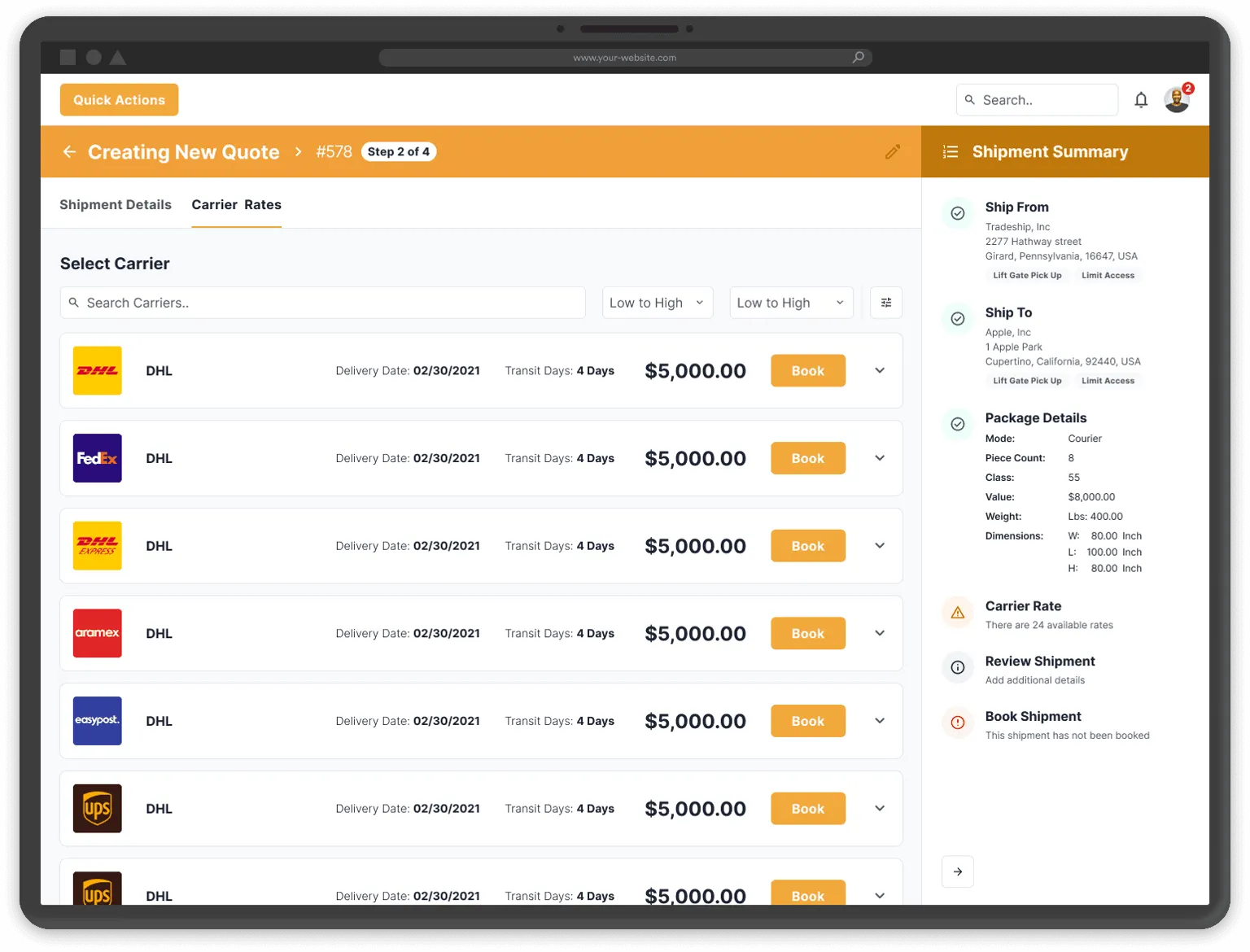
Carrier Bidding
The client's main selling point is the user's ability to request carrier rate quotes, start auto-tender, and book a carrier manually for their shipments. Create favorite shipments, and much more.
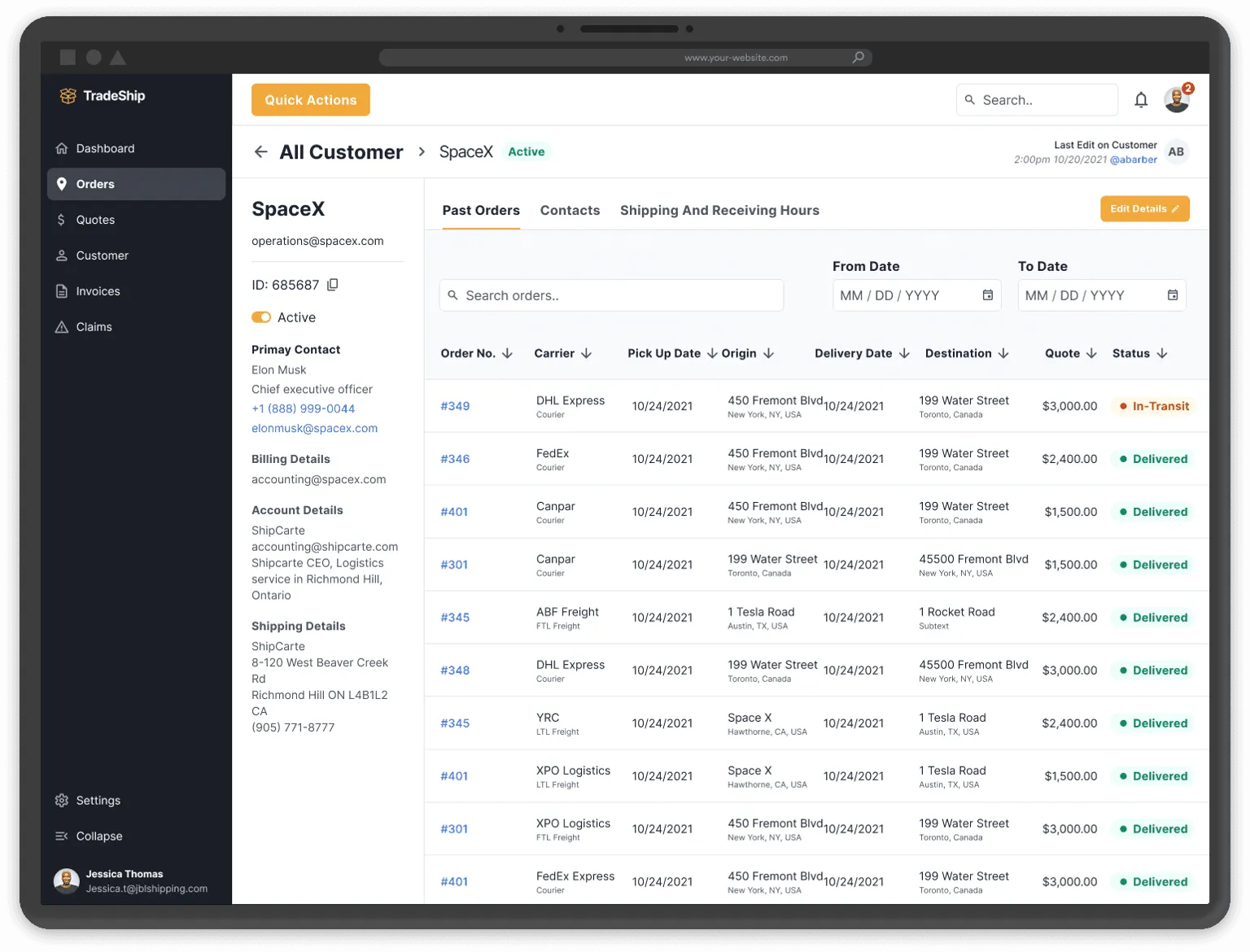
Customers
We wanted to give user's an easy way for them to navigate and manage their customers with a convenient place to view orders and edit customer details
Outcome
- Stakeholder sign-off All designs and assets approved; platform moved into development
- Design system Modular, atomic system built from scratch
- Personas served Shipper + Carrier Manager in one unified platform
Impact
For the business: turned 30 years of freight know-how into a product and brand that could compete as a modern platform
- For shippers: one login to compare carriers, book, track and pay, instead of juggling accounts
- For carriers: a direct, modern way to win and manage loads without relying on brokers
- For dev: a documented, reusable system that supported ongoing product growth
- What I learned: designing in an unfamiliar industry starts with learning the business, not pushing pixels. Once the UI mirrors how people already work (bidding, tendering, negotiating), complex tools start to feel simple.